The post discusses the appearance and lifecycle of sand dollars, revealing that they are actually the skeletons of sea creatures found in coastal waters. It highlights their blue or green color when alive and the surprising sight on their underside.
Have you ever found a sand dollar, walking along a beach? If not, there’s a good chance that you’re familiar with them as they are seen in gift shops the world over. They are smooth, hard, white discs and have a pattern in the middle like a flower.
Like many types of seashells, sand dollars are commonly used in arts and crafts, wall art, jewelry, wedding decorations, and so much more! The question really is what IS a sand dollar after all? It turns out that the sand dollar most of us have come to know is actually the remains of a dead sea creature.
Specifically, it’s the skeleton, and it’s bright white from being bleached by the sunlight. Sand dollars got their name a long time ago when people thought they looked like old Spanish or American dollar coins.
Sand dollars are bashful echinoids that are cousins to sea cucumbers, sea urchins, and starfish. When they’re alive, they can be found in shallow coastal waters. This is where they live most of their lives on the seafloor eating microscopic marine life.
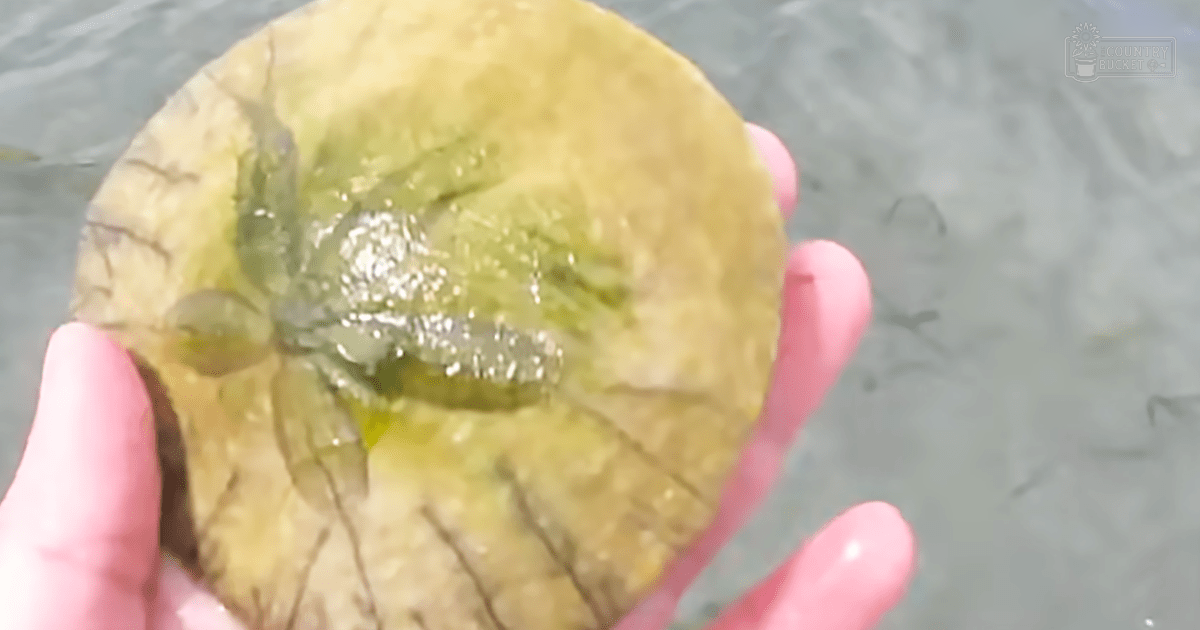
A surprising fact about sand dollars is that they are not white when they are alive; they are blue, or often green. More incredible still is what is found on the underside of a sea dollar, but you’ll have to check out the video below to see that!